
Sunday, August 11, 2013
Feature Shoot
I am quite honored that Julia Sabot, photo editor of Dwell Magazine, highlighted my work in Lakewood on the blog Feature Shoot. Have a read...."Lakewood: Portraits of a Sacred American Suburb."

Monday, July 8, 2013
Saturday, May 25, 2013
Photoshop Workshop
Since I just recently finished
changing my website to APhotoFolio X design, I thought I’d make a blog
entry. It’s been months since I’ve done
so, and now seems as good as time as any.
And rather that waste words on why I haven’t made any entries in ages I’ll
just use my time and energy writing on a recent event. I will however write that writing isn’t easy
for me, and unless I am very inspired to express something it’s difficult for
me to put fingers to keys. I suppose the
same applies with taking photographs.
And like taking photographs sometimes you just have to do it when you’re
not feeling it, and hopefully the inspiration will follow.
I want to begin with discussing the
John Paul Caponigro and R. Mac Holbert Photoshop workshop I attended last month at Brooks Institute in Santa Barbara. It was five days of intensive lectures and
application of Photoshop workflow. The
amount of material they submitted overwhelmed me. At the end of each day I needed to take a
couple of aspirin and a glass of Pinot Grigio to relieve my headaches.
Before the workshop began they
asked us what we thought our level of Photoshop was- beginner, intermediate,
and advanced. I put down
intermediate. I knew well enough that I
was far from advanced, but since I’ve been dabbling in Photoshop for nearly 15
years I couldn’t consider myself a beginner.
After a week with JP and Mac I now consider myself an advanced
beginner. JP kindly placed me in the
middle of the workshop attendees that he has encountered.
A reason I’m not better with
Photoshop than perhaps I ought to be is for the longest time I resisted and
refused to embrace digital technology. Yet
now if you wish to compete in the editorial market, unless you’re famous it’s
impossible to abstain from shooting digital.
For personal work, I still shoot film, so in a sense I still resist
it. But the reason I shoot film has more
to do with the camera than digital technology.
I do not like making images with a 35 mm camera, and the cost of a
medium format digital camera remains beyond my price range. Thus, I’m still hanging out in the analog
world. Yet every decent image I expose ultimately ends up becoming a digital file.
After making
portfolios for reviews and having friends and colleagues critique my work I
learned the necessity of making better prints.
I’ve made a great deal of improvement, yet I've known that my printed images were far from perfection. A couple of
colleagues whose work I greatly admire have taken this workshop, and they had nothing but rave reviews for
what they learned from it. Have a look at
Svjetlana Tepavcevic's work. Her prints
are exquisite, and her work went to another level after attending JP and Mac’s
workshop. She continues to return to her
workshop notes and John Paul Caponigro blogs for different techniques to enhance
her images. As she likes to say she’ll
work on a technique until she owns it, i.e. it becomes a part of her Photoshop tool
kit.
After a month I’m still trying to gather
all the information they presented and processing all that I learned. I was warned to be prepared, which meant that
the more you know going into this workshop the more you’ll gain. Photoshop, like any other craft, art, or
skill is something one must practice consistently and regularly, and the
broader one’s base of knowledge is going into the workshop the more one will
gain from the workshop.
I will not go into all the
techniques I learned during the week, but I will write that I’ve added the
gradient tool and the Selective Color Adjustment Layer to my toolbox. For my work it’s not about compositing, HDR,
or making someone’s skin perfect, it’s about having the controls to make my
work look like I envisioned it and enhancing the qualities, e.g. contrast and
color, of the image to make it appear its best.
I recommend the class for anyone
who wants to improve their Photoshop skills and learn the proper way to use the
application. I do not suggest the class
for beginners. In fact I wouldn’t
recommend it for anyone who hasn’t been using Photoshop for at least 5 years.
Both Mac and John Paul have
websites that have a ton of free information.
In fact you might see me there. I
highly recommend bookmarking Mac’s basic image workflow pdf. I follow it on every image I work on. Finally, not only are Mac and John Paul
Photoshop masters and prodigiously smart, they are nice guys and incredibly
helpful and patient.
Wednesday, December 19, 2012
The Serendipitous Portrait
Of late it's been my goal to make conceptual portraits. That is when given assignment or working on a personal I attempt to create a provocative portrait that has some sort of narrative. I.e. before I show up at the location of the session I've prepared at least two concepts that will illustrate a story about my subject. This requires much pre-production brainstorming, jotting down of ideas, followed by weeding out of the ridiculous or the cost prohibitive, further brainstorming, and finally settling upon something I know how to do and preferably something I've never done before. Equally I demonstratively don't want to make a photograph that's, and it's also not my style, cliché or contrived. This type of portrait is common for many editorial portrait photographers. Some of the best at this are Annie Liebowitz, Mark Seliger, Martin Schoeller, Chris Buck, Peter Yang to name just a few. Their work, even though much has gone into it, never seems forced. I've read and heard many interviews with these photographers and others discussing some of their most successful portraits. And what is most common is that even though they came prepared to their shoots with tons of lights, ideas, props, and sometimes the whole dog and pony show, their most outstanding images came about often by chance, happenstance, a happy accident, or even a mistake.
Then there are the portraits that fall into your lap. Last week I was returning home from picking up a couple scones for breakfast and I came upon this image. I sped home grabbed my faithful Hasselblad with its standard 80mm lens (the tools for 90% of my images). Fortunately, she hadn't moved from where I had previously seen her. I have met and even photographed this Crossing Guard before, yet in my wildest dreams I could have never conceived this photograph. I just happen to have been lucky that morning to have come upon it.

Then there are the portraits that fall into your lap. Last week I was returning home from picking up a couple scones for breakfast and I came upon this image. I sped home grabbed my faithful Hasselblad with its standard 80mm lens (the tools for 90% of my images). Fortunately, she hadn't moved from where I had previously seen her. I have met and even photographed this Crossing Guard before, yet in my wildest dreams I could have never conceived this photograph. I just happen to have been lucky that morning to have come upon it.

Tuesday, October 23, 2012
The Inexplicit Artist Portrait
For the past year I have been working on a project called Los
Angeles Artists, abbreviated - LA Artist.
The project began after I photographed my uncle, Charles
Garabedian. The prestigious gallery LA
Louver represents Charles, and at 87 he is well established not only in Los
Angeles but internationally as well. He
was the perfect initial subject because it was easier to get other artists to
agree to participate once I had him in my portfolio.
Different than other portrait sessions with a creative it is
always a learning experience. I’ve
become fascinated listening to artists discuss what motivates them and the
various processes they use to produce their work.
A good artist portrait is a challenge because it mustn’t be
overly literal, yet the image should hopefully exhibit something about the
artist and his work or method. Though
some of my photos have the artists near or next to their work, I desperately work
the juxtaposition of the two with the desire to make portrait that is neither obvious
or cliché.
There are many factors that either make it easier or more
difficult to create a good portrait. The
space and light in the artist’s studio can either be an aid or hindrance. Most studios have good light, so that more
often than not is an asset. However, as
best I can, and it’s extremely difficult to refrain from the tried and true, I avoid
the typical available light environmental portrait. Rather I’m pursuing a more conceptual
interpretational portrait. I.e. in
addition to working with the environment, I’m using my own lights and ideas
combined with the artists’ tools and work to create a more conceptual
portrait. My goal is to make a portrait that isn’t so
literal, but does have some sort of narrative.
Below beginning with my uncle are four examples of artists
in which their work isn’t explicit, yet the image provides a
glimpse and a narrative into who they and their work represents.


Thursday, October 18, 2012
The "Life" of an Artist
I first met Brian Doan at Long Beach City College two years
ago in his photography class “Alternative Processes.” Due to time restraints I considered dropping
the class, and that thought grew once I heard Brian speak. Brian has a thick Vietnamese accent, which at
times is difficult to understand.
However, there was something in his demeanor that compelled me to overcome
the communication barrier. Perhaps the
difficulty I had understanding him forced me to concentrate more on his manner because
I sensed a keen awareness of someone who has experienced the extremities of
life.
Since August the Oceanside Museum of Fine Art is Brian’s
work in its current exhibit Facing West / Looking East. The exhibit features artists whose works are
the reflection of the duality of their experiences of both Asian and California
cultures and their affects upon them. Via
a combination of photo illustration, sculpture, and multi-media Brian’s work is
an expression of his life - being a refugee of a communist country and a Vietnamese
American.
Fighting for the survival of the photography program at Long
Beach City College, the duties of being a single parent, the recent death of
his father, and the demands of being a teacher and an administrator, all the
while trying to find time and space to create more work make for challenging
times. But this is Brian’s life, and as
much as he would love nothing more than to focus on making art I sense he
thrives on this demanding and chaotic existence. And, through it all he will use what he’s now
enduring as a source to create more art.
For a little over an
hour Brian and I talked about his life in Viet Nam, becoming an American, his
relationship with his father, his mentors Nick Nixon and Abelardo Morell, and
his development as an artist. I learned
that though he intends to move beyond the two dimensions of the photographic
image photography is and will continue to be the basis of his work. I was most interested in learning how the
photographer developed into a conceptual artist. He told me studying philosophy in graduate
school helped him to become cognizant of his own beliefs and that the act of
making a photograph was an expression of self.
Nick Nixon told him “your life will teach you how to make your art.” Having been raised in a war-torn communist
country, then as a young man unable to speak English immigrating to sunny, laid
back, capitalistic Southern California, Brian was destined to create work that
explored the contrast between Vietnamese and American culture and his existence
within those two worlds.
During an exhibit in 2008 at the Vietnamese American Art
Center in Little Saigon Brian learned a difficult lesson. His form of expression outraged many in the
Viet Nam community because one of his portraits contained symbols of communist
Viet Nam. His feelings were
ambivalent. As an artist he drew a
certain satisfaction that his work had provoked a strong reaction, however it wounded
him to realize that the unintended consequences of his work had caused his
family and community so much pain. Yet,
rather than withdraw from the source of this resentment, in 2010 with the aide
of a Fulbright Grant, he returned to Viet Nam to delve deeper into the roots of
this conflict.
One piece that stands out at the Oceanside exhibit is the
multi-media piece “White Christmas.” The
work is autobiographical. It’s a
haunting impression of the day that a four-year old boy’s world was turned up
side down. Small toy figures represent
Brian and his fleeing family, his father, and the helicopter that would
separate them for ten years. All of this lies atop of a TV displaying only
static, but from it emanates the familiar American Christmas song “White
Christmas.” That melody warned the South
Vietnamese that the North had invaded Saigon and for those fortunate enough to have
the connections it was time to get out.
For those without that ticket out it was time to prepare for all that
they had feared.

Friday, August 24, 2012
Start of a Project
I've begun a new project. It's too early to explain what it is, however I'm excited about it because I believe it's provocative and relevant. However, I will admit that it will be all portraits of different people who have one thing in common. I have yet to write a project statement because I would like to get at least 5 shoots under my belt to see what develops. Without writing what the project is about I would like to share an images from my first shoot. The subjects were Kevin and his son Spencer Gates. I've gotten to know Kevin through a mutual friend. The three of us surf and about once a month we car pool to the beach. On our trips we share our stories. It was actually Kevin who unknowingly planted the seed of inspiration for the new project. Kevin has two children, a boy and a girl. His oldest, Spencer, has an extremely rare genetic disease titled Mucolipidosis III. Because it's rare and so few people are born with it there has not been a lot of research done on it, thus, unfortunately, as of yet there is no cure. All Kevin and his family can do is give Spencer the best life they can. I will not go into the affects of the decease because I don't really have all the details. I will write that it is obviously crippling and from Kevin's accounts it can be extremely painful. Yet, since Spencer was born with decease, the pain and hardship inflicted by the decease are what he has always known. So, he deals with it.
Kevin works and plays hard, yet he is completely dedicated to making sure that his son gets the most out of his life. I don't know how Kevin does it all, I have a hard enough time just taking care of myself.
.
On our surfing excursions Kevin has shared a lot of stories on the scouting trips he's done with Spencer, hence the idea for this shoot. I have lots of ideas for photographs, yet due to impracticality very few result in photographs. And of those that make it on film or pixels rarely do they end up like imagined. However this photograph of Spencer and Kevin turned out exactly how I envisioned it. Before the day of the shoot I knew where and when I wanted to make the photograph. I knew exactly what camera, lens, film, and light source I wanted to use to make the photograph. I had even imagined the mood and expressions. When we arrived at the location all the elements came perfectly together, and I knew I had a great photograph when I made it.
I am very proud of this image, but not because of its quality. It's dear to me because of its humanity.

Kevin works and plays hard, yet he is completely dedicated to making sure that his son gets the most out of his life. I don't know how Kevin does it all, I have a hard enough time just taking care of myself.
.
On our surfing excursions Kevin has shared a lot of stories on the scouting trips he's done with Spencer, hence the idea for this shoot. I have lots of ideas for photographs, yet due to impracticality very few result in photographs. And of those that make it on film or pixels rarely do they end up like imagined. However this photograph of Spencer and Kevin turned out exactly how I envisioned it. Before the day of the shoot I knew where and when I wanted to make the photograph. I knew exactly what camera, lens, film, and light source I wanted to use to make the photograph. I had even imagined the mood and expressions. When we arrived at the location all the elements came perfectly together, and I knew I had a great photograph when I made it.
I am very proud of this image, but not because of its quality. It's dear to me because of its humanity.

Wednesday, August 1, 2012
Venus de Milo
And you assumed Venus de Milo was a part of the Louvre's permanent collection.


Years ago, upon a tree on his front yard, a Lakewood resident sculpted his version of Venus de Milo . He has long since vacated this residence, however the new owners maintain (although she is in desperate need of new coat of paint) the landmark intact and she remains to be seen by many. Yet, when you looked at my portfolio "Lakewood: Portraits of a Sacred American Suburb" or my website you did not see this image nor will you ever. Why? From time to time I'll use photoshop to remove a piece of unwanted litter, but for the most part I merely adjust my scanned images to make the colors true. I create images on film in camera, however in this case I've attempted to make a major alteration. You see when the creator whittled his version of the famous Hellenistic statue in his front yard he modestly opted to carve the front side of Venus facing his home and her backside towards Lakewood Boulevard, Lakewood's major thoroughfare. Unfortunately, no matter the time of day or light, photographing the front of Venus with Lakewood Blvd in the background just wasn't appealing, and photographing her backside with her home in the background didn't work as well. So, I tried to cheat, but my photoshop skills are so bad and my conscious so annoying that didn't work either.


Thursday, July 26, 2012
A Week with Chris Buck, Part II
In the course of the week Chris shared many thoughts with us. Here are just a few. When in doubt light from the behind. Embrace physical awkwardness. Details can't distract from the idea. Passion for the subject matter is the single most important thing in any endeavor. Do the safe stuff first. Keep on asking for your shot. You can pull it out of them!!! To ask for permission is to seek denial. Don't ask, lead. Never make your issues your client's issues. Finally my favorite, "You have to raise your expectations to get the possible."


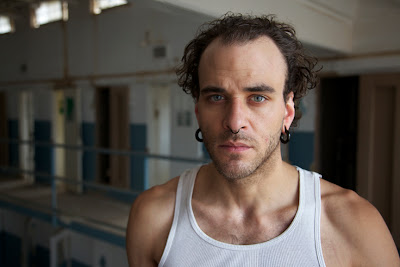


Day 4
Our location for the fourth day was a New Mexico State Penitentiary that had been shut down for almost 20 years. It was the second time I've shot at this location, the first was during a Keith Carter workshop eleven years ago. It's really a fantastic location. The prison scenes from the film All the Pretty Horses were filmed there, and the faux façade created by the film crew remain connected to the original structure. There is great light, texture, and a ton of energy in the place-much of it morbid. Before the prison was shut down there was a massive riot, and some 38 people were killed. There is also a gas chamber in the prison, although now they no longer let workshops photograph it. Eventually the entire prison will probably be off limits to workshops and photography. They have rules there, and photographers, by nature, are always breaking the rules.
Chris had us doing photographs that represented our fears and anxieties, stuff that got in the ways of us making photographs and our careers. This assignment was a no brainer for me. The prison was an obvious metaphor. It was my best day of shooting.


Monday, July 23, 2012
A Week with Chris Buck, Part 1.
The first week of July I returned to Santa Fe to participate in Chris Buck's workshop The Surprising Portrait. It was an incredible experience. I love the Santa Fe Photographic Workshops, and if I could afford it I'd attend 2 or 3 a year. There exists lots of 2 and 3 day workshops, but I don't endorse them. The 2 and 3 day workshop end when I feel I'm just starting to cook. On the 4th day of a week workshop is when personal, creative, and emotional barriers are broken.
In addition to being a very successful and talented photographer, Chris Buck is an intellect. I submit a partial reason for his success is he puts that intellect into his work. But that's not the complete story: Chris throws his entire being into making memorable images. And that's what he drilled into us. Before my previous portrait sessions I had assumed that I put in a considerable amount of effort into preparation. I learned the painful lesson that all these years I had been underprepared.
Right off the bat I appreciated the fact that Chris didn't spend an entire day looking at our old images. He showed 2 images of each participant, had us give a brief synopsis about ourselves and work then moved on. Chris was not interested in where we had been or where we were he was much more enthusiastic on taking us where we needed to be. And it was one hell of a ride. I believe I can speak for everyone in the workshop that by the end of the week we were twice the photographers we were when we first assembled. As well as altering my perspective on how to approach an assignment I learned a few different ways to light, which I can't wait to experiment with and master.
Our first assignment was to make a portrait of Chris Buck. His intention for doing this was to see how we prepared, interacted with the subject, and handled adversity. He wanted to see how we worked. It was a bit disconcerting to see him takes notes as we made our photographs. This was our only day in the studio, and on one of the bays there was this hideous red sweep that I would not choose to photograph upon in a million years. However, I was in Santa Fe to challenge myself, so that's where I made my portrait of Chris Buck.

The following day Chris critiqued our portraits of him, but he was more interested in telling us what he had learned about us photographing him. He gave compliments and critique, but all in all we learned some good tips on how to approach a subject and take control of our set.
For the remainder of the workshop each day he gave us assignments at different locations. Day 2 at we photographed at a Masonite Temple in downtown Santa Fe. There was many places and beautifully lit room to photograph within the temple and plenty of themes for us to draw upon. We had an 1/2 hour with each model and here are some my images from that day.


At the Masonic Temple there was also a small theatre. During our time there, there was pianist rehearsing for a performance, and he wished not to be disturbed. So I took Jaime, the male model, and Sophie one the class assistants to the wings. During my years of studying ballet, a few times I had the opportunity to watch a performance from the wings. I much prefer to watch a performance there than in sitting in the seats. It's where you find the dancers preparing themselves for their return to stage or where they're catching their breadth from having just been on stage. It's where their stage facade is dropped and all the drama happens.

The following day was the 4th of July, and Chris who is Canadian has a lot of thoughts on what America is about. He wanted us to create three narratives that represented something particular to America. The location for the day was a western movie set, located about 20 miles south of Santa Fe called Eames Ranch. it was a cool location although is some ways it competed with our narratives. My first shot was of a blond model named Blake. My idea was to create narrative of a young woman raised with low self-esteem who had always kept company with the wrong men finds God, and becomes a Christian. What Blake or anyone else didn't have was a necklace with a cross. That little detail as well as not having an old bible I feel would have greatly supplemented the images.


My second photograph was with Andrea, an African American model. With him I tried to create a narrative about a man hardened by the history of his race and his life, yet he 100% embraces being an American. And although he understood life in America is not what he would hope for his race and himself, he remains proud of his country and what he does for living. In this case he was a blacksmith.


My third choice was to create a narrative using the caretaker of Eaves Ranch. Thomas is crusty fellow who doesn't mind sharing his opinion. I thought he would be the perfect character to create my idea for a counter narrative. I see so many of his demographic that hate President Obama. When I first saw a photograph of him I thought of Tea Party folks. So I thought it would be interesting to have him wear my Obama t-shirt, that reads Made in America. It's a t-shirt that on the back has picture of the president's birth certificate, an obvious dig at the Birthers. I wasn't sure if he'd agree to my idea, but he is an Obama supporter. Unfortunately, the shot doesn't carry my idea. About a week later, I realized this photograph would have worked much better if he was holding an American flag.

While I was photographing Thomas a nasty storm came upon us. First there was a furious wind that ripped off one of the façades of a faux western store. Next care lightning, where one bolt actually hit one of the buildings, followed finally my a torrential down pour. In the midst of it all I got this photograph of one of the workshop assistants, Sophia, who was busy moving gear to safety through the muddy streets of Eaves Ranch.

In addition to being a very successful and talented photographer, Chris Buck is an intellect. I submit a partial reason for his success is he puts that intellect into his work. But that's not the complete story: Chris throws his entire being into making memorable images. And that's what he drilled into us. Before my previous portrait sessions I had assumed that I put in a considerable amount of effort into preparation. I learned the painful lesson that all these years I had been underprepared.
Day 1
Right off the bat I appreciated the fact that Chris didn't spend an entire day looking at our old images. He showed 2 images of each participant, had us give a brief synopsis about ourselves and work then moved on. Chris was not interested in where we had been or where we were he was much more enthusiastic on taking us where we needed to be. And it was one hell of a ride. I believe I can speak for everyone in the workshop that by the end of the week we were twice the photographers we were when we first assembled. As well as altering my perspective on how to approach an assignment I learned a few different ways to light, which I can't wait to experiment with and master.
Our first assignment was to make a portrait of Chris Buck. His intention for doing this was to see how we prepared, interacted with the subject, and handled adversity. He wanted to see how we worked. It was a bit disconcerting to see him takes notes as we made our photographs. This was our only day in the studio, and on one of the bays there was this hideous red sweep that I would not choose to photograph upon in a million years. However, I was in Santa Fe to challenge myself, so that's where I made my portrait of Chris Buck.

The following day Chris critiqued our portraits of him, but he was more interested in telling us what he had learned about us photographing him. He gave compliments and critique, but all in all we learned some good tips on how to approach a subject and take control of our set.
Day 2


At the Masonic Temple there was also a small theatre. During our time there, there was pianist rehearsing for a performance, and he wished not to be disturbed. So I took Jaime, the male model, and Sophie one the class assistants to the wings. During my years of studying ballet, a few times I had the opportunity to watch a performance from the wings. I much prefer to watch a performance there than in sitting in the seats. It's where you find the dancers preparing themselves for their return to stage or where they're catching their breadth from having just been on stage. It's where their stage facade is dropped and all the drama happens.

Day 3


My second photograph was with Andrea, an African American model. With him I tried to create a narrative about a man hardened by the history of his race and his life, yet he 100% embraces being an American. And although he understood life in America is not what he would hope for his race and himself, he remains proud of his country and what he does for living. In this case he was a blacksmith.


My third choice was to create a narrative using the caretaker of Eaves Ranch. Thomas is crusty fellow who doesn't mind sharing his opinion. I thought he would be the perfect character to create my idea for a counter narrative. I see so many of his demographic that hate President Obama. When I first saw a photograph of him I thought of Tea Party folks. So I thought it would be interesting to have him wear my Obama t-shirt, that reads Made in America. It's a t-shirt that on the back has picture of the president's birth certificate, an obvious dig at the Birthers. I wasn't sure if he'd agree to my idea, but he is an Obama supporter. Unfortunately, the shot doesn't carry my idea. About a week later, I realized this photograph would have worked much better if he was holding an American flag.

While I was photographing Thomas a nasty storm came upon us. First there was a furious wind that ripped off one of the façades of a faux western store. Next care lightning, where one bolt actually hit one of the buildings, followed finally my a torrential down pour. In the midst of it all I got this photograph of one of the workshop assistants, Sophia, who was busy moving gear to safety through the muddy streets of Eaves Ranch.

Subscribe to:
Posts (Atom)
